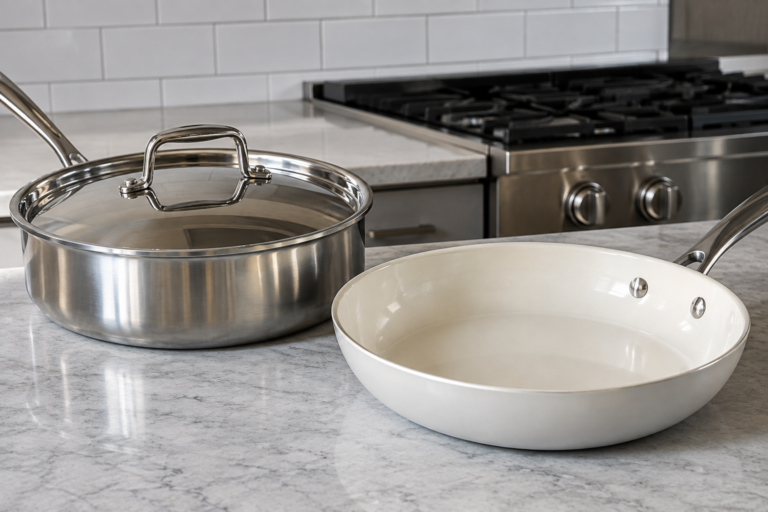
Stainless Steel vs Ceramic Cookware: Which Is Better?
Compare stainless steel and ceramic cookware for food release, high-heat cooking, durability, cleaning, coatings, and long-term value.
BUYING GUIDE
The quick answer: ceramic-coated pans give eggs and delicate foods easier release, while uncoated cast iron and stainless steel tolerate harder use and can last far longer.
Someone shopping for a PFAS free frying pan shouldn’t have to decode whether “PFOA-free,” “ceramic,” and “non-toxic” all mean the same thing. They don’t. This guide sorts the labels first, then compares the pans that meet the stated standard.
Table of contents: At-a-glance comparison · Full reviews · Swiss Diamond CXD · Ceramic vs. uncoated · What PFAS-free means · How I chose · Which pan to choose · FAQs
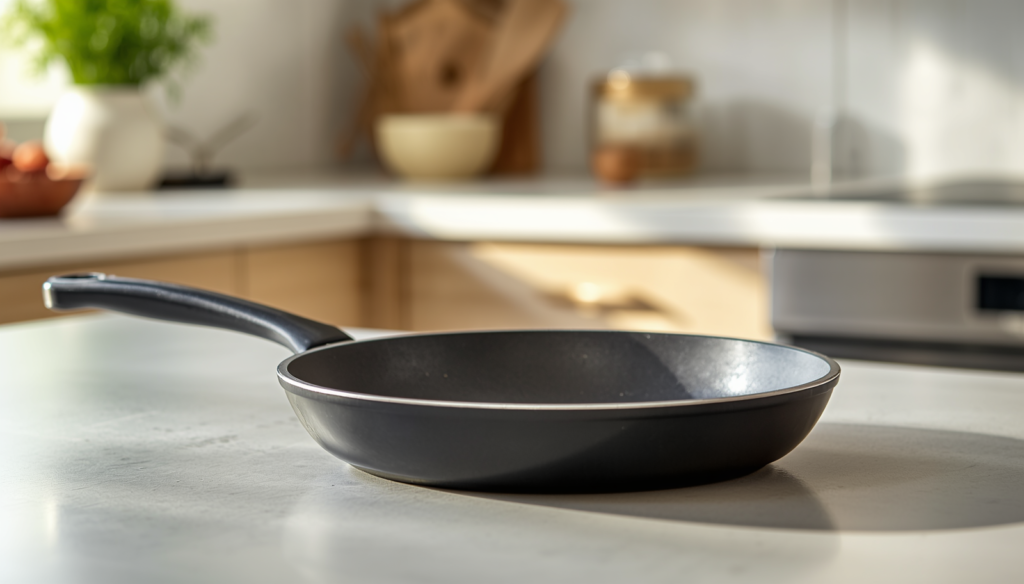
| Pan | Best for | Cooking surface | Size | Induction? | Oven safe? | Approx. price |
|---|---|---|---|---|---|---|
| GreenPan Valencia Pro | Overall ceramic | PFAS-free ceramic coating | 10 in. | Yes | Pan 600°F; lid 425°F | $70–$100 |
| Lodge Cast Iron | Budget, searing | Seasoned cast iron | 10.25 in. | Yes | Oven, grill, campfire | $15–$30 |
| All-Clad D3 | Long-term stainless | Uncoated stainless steel | 12 in. | Yes | 600°F | $120–$180 |
| GreenPan Rio set | Two ceramic sizes | PFAS-free ceramic coating | 8 + 10 in. | No | 350°F | $40–$70 |
| Blue Diamond Classic | Lightweight value | PFAS-free ceramic coating | 10 in. | No | 600°F | $15–$30 |
| Swiss Diamond CXD | Premium ceramic | PFAS- and PTFE-free dual-layer ceramic | 10.25 in. | Yes | 500°F | Check current price |
Affiliate Links. Price and availability may change.
The six pans below cover two routes: ceramic-coated pans for easier release, and uncoated cast iron or stainless steel for high heat and a longer useful life. Each recommendation includes a reason to buy it and a reason to choose something else.

Affiliate link. Price and availability may change.
PFAS-Free Ceramic Coating • Induction Compatible • Pan To 600°F; Lid To 425°F
Valencia Pro is the easiest recommendation here for someone who wants a ceramic-coated pan that still feels substantial. The hard-anodized aluminum body is more rigid than a very light bargain pan, and its induction base works on gas, electric, and induction cooktops.
Its Thermolon ceramic nonstick is made without intentionally added PFAS. The company also recommends low-to-medium heat, a little oil or butter, and silicone or wood utensils to help the coating last. That care advice matters more than the “metal utensil safe” marketing line.
The Drawback: Ceramic nonstick is still a coating. Its easy-release performance will gradually decline, and high heat or cooking spray can speed that up. It also costs much more than the budget ceramic choices.
Best For: Eggs, pancakes, fish, and everyday meals when easy cleanup is the priority.
Skip It If: You want a pan to preheat hard for steak, use with metal tools every day, or keep for decades.
Seasoned Cast Iron • Induction Compatible • Oven, Grill, And Campfire Ready
Lodge’s classic skillet is the low-cost answer if you would rather avoid a manufactured nonstick coating altogether. The cooking surface is cast iron seasoned with baked-on vegetable oil. It holds heat well, moves from stove to oven without fuss, and can build a smoother release over time when it is used and cared for consistently.
That heat retention makes it especially good for browning, shallow frying, cornbread, and meals that finish in the oven. It also works on induction, although you should lift rather than slide it across a glass cooktop.
The Drawback: It weighs a little over five pounds before food goes in. It also needs to be dried promptly and given a thin film of oil when the seasoning looks dry. Long acidic simmers can be rough on newer seasoning.
Best For: High-heat cooking, oven use, and buyers who want durability on a small budget.
Skip It If: Lifting a heavy pan is uncomfortable or you want a completely hands-off cleanup routine.

Affiliate link. Price and availability may change.

Affiliate link. Price and availability may change.
Uncoated Stainless Interior • Fully Clad 3-Ply • Induction • 600°F
This is the stainless winner carried over from the uncoated stainless steel cookware guide. Food touches stainless steel, while an aluminum core runs through the base and sides to spread heat. The 12-inch size gives dinner more room to brown, and it includes a stainless lid.
Stainless takes more technique than ceramic. Preheat gradually, add fat, and give food time to release before turning it. Once you learn that rhythm, the pan can handle searing, sautéing, pan sauces, and oven finishing.
The Drawback: It is the most expensive pan on this list, the grooved handle is not everyone’s favorite, and delicate food can stick while you are learning.
Best For: Someone who wants one versatile, long-lasting skillet and cooks beyond eggs.
Skip It If: Instant easy release matters more than high-heat performance or longevity.
Two Lightweight Aluminum Pans • PFAS-Free Ceramic Coating • Oven To 350°F
The Rio set gives you a small egg pan and a more useful 10-inch skillet for about the price of one midrange ceramic pan. The Thermolon surface is PFAS-free.
The pans are about 1.14 and 1.67 pounds, so they are easy to lift and quick to heat. The molded handles keep the pans light and comfortable for stovetop cooking.
The Drawback: This set does not work on induction, the 350°F oven limit is modest, and the coating needs gentle heat and utensils. Treat Rio as a convenient value set rather than cookware you expect to keep indefinitely.
Best For: A gas or electric kitchen that wants two useful ceramic sizes without a premium price.
Skip It If: You cook on induction or regularly move pans into a hot oven.

Affiliate link. Price and availability may change.

Affiliate link. Price and availability may change.
PFAS-Free Ceramic Coating • Not Induction Compatible • Oven And Broiler To 600°F
Blue Diamond’s 10-inch pan is the budget choice for someone who wants a single lightweight ceramic skillet. Its diamond-infused ceramic coating is free of PFAS, PFOA, lead, and cadmium. The aluminum body heats quickly, and the riveted stainless handle allows a higher oven limit than most pans with molded handles.
It’s a low-commitment way to try ceramic nonstick before investing in a larger set.
The Drawback: It is not induction compatible, and the light body will not hold heat like cast iron or fully clad stainless. Despite the high oven rating, routine high-heat cooking is not the best way to preserve a ceramic coating.
Best For: Eggs and quick weekday cooking on gas or electric burners.
Skip It If: You want the heavier build of Valencia Pro, induction compatibility, or a surface meant for aggressive searing.
Swiss Diamond’s CXD 10.25-inch fry pan earns the premium ceramic spot because it adds something the budget picks do not: a heavier cast-aluminum body, full induction compatibility, and a dual-layer ceramic surface made in Switzerland. Swiss Diamond explicitly states that the CXD coating is made without PFAS, PTFE, or PFOA.
The cooking surface pairs a plasma-hardened base layer with a diamond-infused ceramic finish. The 10.25-inch pan weighs about 3.25 pounds, works on gas, electric, ceramic, and induction cooktops, and can go into an oven up to 500°F. Swiss Diamond recommends low-to-medium heat, avoiding empty-pan overheating, and hand washing to preserve the coating.
The Drawback: It costs considerably more than Rio or Blue Diamond, and the heavier body may not appeal to someone specifically shopping for a very light pan.
Best For: Someone who wants a premium PFAS-free ceramic pan with induction compatibility and a more substantial feel.
Skip It If: Value or the longest possible lifespan matters more; Lodge or All-Clad is the better fit in those cases.

| Surface | What it does well | What to expect | Best match here |
|---|---|---|---|
| Ceramic-coated | Easy release, quick cleanup, lighter weight | Coating gradually loses performance; gentle care helps | GreenPan Valencia Pro Swiss Diamond CXD |
| Cast iron | Heat retention, searing, oven use | Heavy; needs seasoning and prompt drying | Lodge 10.25-inch |
| Stainless steel | Browning, pan sauces, durability, acidic foods | Requires heat and fat technique; not naturally nonstick | All-Clad D3 |
For a broader look at these tradeoffs, see the guide to kitchen cookware materials.
For shopping purposes, a clear PFAS-free claim means more than a vague “non-toxic” label. It should come from the manufacturer and apply to the exact cooking surface and not just the pan’s exterior or one item in a set.
Uncoated stainless steel and bare cast iron do not need a synthetic nonstick layer. Ceramic pans do have a coating, so the maker’s documentation matters.
Construction, weight, cooktop compatibility, oven limit, size, price, and realistic care requirements all counted. A clean label cannot rescue an awkward pan.
Match the surface to the way you actually cook.
Compare stainless steel and ceramic cookware for food release, high-heat cooking, durability, cleaning, coatings, and long-term value.
Compare six stainless steel cooking utensils, including a practical set and the five tools most kitchens actually need.
We use cookies to improve your experience on our site. By using our site, you consent to cookies.
Manage your cookie preferences below:
Essential cookies enable basic functions and are necessary for the proper function of the website.
Statistics cookies collect information anonymously. This information helps us understand how visitors use our website.
Google Analytics is a powerful tool that tracks and analyzes website traffic for informed marketing decisions.
Service URL: policies.google.com (opens in a new window)
You can find more information in our Cookie Policy and .