A cutting board is one of those kitchen essentials you probably don’t think much about until you’re replacing one, especially when considering the best wooden cutting boards for your needs.
If you’re trying to make more intentional choices about the products you use every day, though, it is worth paying attention to what your cutting board is made from, how the wood is sourced, what finish is used, and how well the board will hold up over time.
Wooden cutting boards are a simple alternative to plastic. They’re durable, reusable, and generally easier on knife blades than very hard cutting surfaces. But “wooden” doesn’t always mean better. Construction, finish, maintenance, and sourcing all make a difference.
I looked for boards that offer something genuinely worth considering, like FSC-certified wood, a simpler finish, durable construction, or a design that makes everyday food prep easier.
If you’re looking for simple ways to make more intentional choices in your kitchen, see 5 Best Kitchen Swaps to Easily Reduce Chemical Exposure.
Here are five wooden cutting boards I’d consider for a more thoughtfully chosen kitchen.
Ziruma FSC-Certified Acacia Wood Cutting Board
Ziruma’s 16-by-11-inch acacia cutting board is made from FSC-certified acacia and is conditioned with beeswax, flaxseed oil, and lemon oil. Ziruma says the finish is an alternative to mineral oil. I like how the company is transparent about both the wood and the finish.
It’s also a practical size for everyday chopping without taking over your entire counter.
The board is reversible, with a juice groove on one side, and its 1.5-inch thickness gives it a more quality feel than many inexpensive wooden boards.
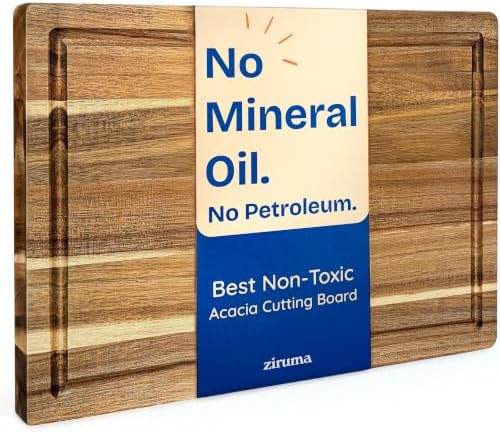
- 𝗙𝗶𝗻𝗶𝘀𝗵𝗲𝗱 𝘄𝗶𝘁𝗵 𝗕𝗲𝗲𝘀𝘄𝗮𝘅 𝗮𝗻𝗱 𝗡𝗮𝘁𝘂𝗿𝗮𝗹 𝗢𝗶𝗹𝘀 – 𝗡𝗼 𝗠𝗶𝗻𝗲𝗿𝗮𝗹 𝗢𝗶𝗹 𝗼𝗿 𝗣𝗙𝗔𝗦: Unlike standard cutting boards, ours is conditioned wit…
- 𝗦𝗼𝗹𝗶𝗱 𝗔𝗰𝗮𝗰𝗶𝗮 𝗪𝗼𝗼𝗱. 𝗡𝗮𝘁𝘂𝗿𝗮𝗹𝗹𝘆 𝗧𝗼𝘂𝗴𝗵 𝗮𝗻𝗱 𝗕𝘂𝗶𝗹𝘁 𝘁𝗼 𝗟𝗮𝘀𝘁: While plastic and bamboo boards often fall short in durability and…
- 𝗠𝗮𝗱𝗲 𝗳𝗿𝗼𝗺 𝗙𝗦𝗖 𝗖𝗲𝗿𝘁𝗶𝗳𝗶𝗲𝗱 𝗪𝗼𝗼𝗱 – 𝗘𝘁𝗵𝗶𝗰𝗮𝗹, 𝗧𝗿𝗮𝗰𝗲𝗮𝗯𝗹𝗲, 𝗧𝗿𝘂𝘀𝘁𝗲𝗱: Most wooden cutting boards don’t reveal where their wood com…
Paid Link
Pros:
- FSC-certified acacia wood
- Beeswax, flaxseed oil, and lemon oil finish
- Mineral-oil-free finish
- Reversible
- Juice groove
- Good everyday size
Cons:
- Requires hand washing and regular care
- Acacia grain and color can vary
- Not the best choice if you want a lightweight board
Caraway Birch Wood Cutting Board
Caraway’s cutting boards are made from FSC-certified birch and finished with food-safe oil and wax. The company says the boards are made without plastics, BPA, BPS, and forever chemicals.
It has built-in indents for organizing ingredients, ergonomic handles, and juice grooves. The large version is designed for larger food-prep jobs, while smaller sizes are available for everyday tasks.
One thing to note is the finish. Caraway recommends food-grade mineral oil for ongoing maintenance, so this isn’t the choice I’d make if avoiding mineral oil is specifically important to you.

- Made entirely from FSC-certified Birch Wood, our wood cutting boards are eco-friendly, non-toxic kitchen essentials. No …
- FOOD-SAFE FINISH: Featuring a food-safe mineral oil and wax finish, our wooden cutting board ensures not only your safet…
- EFFORTLESS PREP ORGANIZATION: Each food-safe cutting board is designed with a versatile recessed indent that helps keep …
Paid Link
Pros:
- FSC-certified birch
- Food-safe oil and wax finish
- Plastic-free board
- Multiple sizes
- Built-in handles and juice grooves
- Modern, attractive design
Cons:
- More expensive than basic wooden boards
- Uses mineral oil for maintenance
- Hand washing required
- The lighter construction won’t feel like a traditional butcher block
TeakHaus Butcher Block Carving & Cutting Board 311
The TeakHaus 311 is the heavy-duty option. It’s a 16-by-12-inch, 1.5-inch-thick end-grain teak board weighing about 10 pounds. It is reversible, includes a juice canal and hand grips, and is FSC-certified. TeakHaus also says this model as an America’s Test Kitchen recommended board.
The wood fibers are oriented vertically, creating a surface designed to be more forgiving to knife blades and durable under repeated use.
There is a tradeoff, though. This is not a casual board you toss into a cabinet. At 10 pounds, it is substantial, and needs regular maintenance.
TeakHaus pre-oils the board with mineral oil and natural beeswax and recommends additional food-grade mineral oil two to three times per month.

- For Everyday Extraordinary Moments: From weeknight dinners to holiday feasts, this Teakhaus cutting board transforms eve…
- Responsibly Sourced Real Teakwood: Each Teakhaus board is crafted from 100% FSC-certified teak, renowned for its durabil…
- Gift-Ready for Any Occasion: Elegant, functional, and beautifully finished, this board makes a thoughtful gift for weddi…
Paid Link
Pros:
- FSC-certified teak
- Thick end-grain construction
- Reversible
- Juice canal
- Hand grips
- Designed for heavy everyday use
Cons:
- Heavy
- More expensive
- Requires regular oiling
- Not dishwasher safe
- Uses mineral oil as part of its care routine
EcoDecors FSC-Certified Teak Cutting Board
If you like having plenty of room to prep without moving all the way up to a heavy butcher block, the 18-inch EcoDecors teak board is a practical middle ground. It uses solid FSC-certified teak and gives you a generous cutting surface for chopping, slicing, and everyday meal prep.
The larger size is useful if you regularly prep several ingredients at once. Teak is also naturally moisture-resistant, which makes it a practical hardwood for a kitchen environment.
The board includes a handle for easier carrying and a juice groove to help contain liquids from foods like tomatoes, citrus, and meat.
One thing to keep in mind is that EcoDecors offers several teak boards with different finishes and constructions, so make sure you’re looking at the specifications for the exact 18-inch model you’re purchasing.

- Premium FSC Certified Solid Teak Wood – Crafted from 100% FSC certified teak, this teak cutting board offers durability,…
- Edge Grain Design with Juice Groove – This edge grain wood cutting board resists warping and splitting. Includes a built…
- Stain-Resistant & Food Safe Coating – A 3-layer food-safe coating protects against moisture and stains, keeping this tea…
Paid Link
Pros:
- FSC-certified solid teak
- Large 18-inch cutting surface
- Naturally moisture-resistant wood
- Built-in handle
- Juice groove
- Good option for larger meal prep
Cons:
- Larger size takes up more storage space
- Requires hand washing and regular care
- Teak is heavier than lighter woods
- Exact finish and features depend on the specific model
John Boos Maple Cutting Board
John Boos has been making butcher blocks and cutting boards for generations, and its maple boards are a classic choice for a reason.
The Chop-N-Slice series uses Northern Hard Rock Maple, edge-grain construction, a reversible design, and an oil finish. The boards are available in several sizes, including an 18-by-12-inch version that is 1.25 inches thick. John Boos identifies the maple as NSF-certified and describes the wood as renewable, sustainable hardwood.
If you’re less interested in having a trendy “clean kitchen” aesthetic and more interested in buying a straightforward, well-established wooden cutting board, this is the option I’d look at.
John Boos recommends regular conditioning with its Mystery Oil and Board Cream and says its boards are not dishwasher safe.
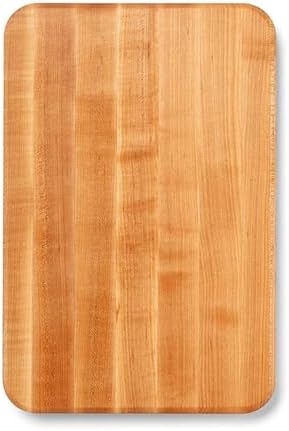
- Wood Cutting Board with Integrated Finger Grips: Elevate your food prep with a Chop-N-Slice series wood cutting board wi…
- Crafted for Your Home: This wooden charcuterie board boasts reversible sides, eased corners, an oil finish, and a level …
- Made for Life: Versatile for different serving and charcuterie-board needs, this 18″L x 12″W cutting board features a 1….
Paid Link
Pros:
- Solid Northern Hard Rock Maple
- NSF-certified maple
- Reversible
- Multiple sizes
- Established cutting-board manufacturer
- Made in the USA with domestic and imported materials
Cons:
- Not FSC-certified
- Requires regular maintenance
- Uses an oil finish
- Heavier than inexpensive boards
What Actually Matters When Choosing A Wooden Cutting Board?
You don’t need to become a cutting-board expert before buying one. A few details are worth understanding, though. Ultimately, the best wooden cutting boards should reflect your cooking style and preferences.
Wood Type
Acacia, teak, maple, and hinoki are all common choices, but they don’t behave exactly the same way.
Harder woods tend to provide a more durable surface, while softer woods such as hinoki are gentler on knives and have a different feel when cutting.
There’s no single “best” wood for every kitchen.
Finish
Some boards use mineral oil and beeswax. Others, like Ziruma, use a combination of beeswax and plant oils. Quince’s Hinoki boards are sold without added coatings or finishes.
None of these details automatically make one board “toxic” and another “non-toxic.” The more useful question is: what exactly is used, and are the materials appropriate for food contact?
Construction
You’ll usually see edge-grain or end-grain construction.
End-grain boards are generally thicker and more expensive, but they can be especially durable and forgiving to knives.
Edge-grain boards are usually lighter and more affordable, making them a practical choice for everyday kitchens.
Size
Bigger isn’t necessarily better.
A large cutting board gives you more prep space, but it also takes up more counter space and becomes heavier to clean and store.
For many kitchens, something around 16 to 18 inches long is a comfortable middle ground.
Wood Sourcing
If responsible forestry matters to you, FSC certification is useful information to look for.
But FSC certification has a specific purpose. It relates to responsible forest management and sourcing. It does not certify the board’s finish, adhesives, durability, or overall chemical profile.
I break down FSC and other common certifications in this guide to household textile certifications.
Are Wooden Cutting Boards More Hygienic Than Plastic?
This is an area where I don’t think the answer needs to be reduced to “wood good, plastic bad.”
Both materials can be used safely when properly maintained. What’s more important is keeping the board clean, drying it thoroughly, and replacing it when it becomes excessively damaged.
If you have specific culinary needs, wooden cutting boards can cater to those and provide optimal surfaces for food preparation.
Plastic boards can be convenient because many are dishwasher safe. Wood requires more care, but it can also be a durable, long-lasting option that doesn’t need to be replaced simply because the surface has become unattractive.
If you’re trying to reduce the amount of plastic you use in your kitchen, switching to wood is a reasonable place to start.
How To Care For A Wooden Cutting Board
A good wooden cutting board is an investment, but it does ask for a little maintenance in return.
Wooden cutting boards create a functional space where you can create culinary masterpieces.
- Wash it by hand with warm, soapy water.
- Never leave it soaking in water.
- Dry it thoroughly after washing.
- Don’t put it in the dishwasher unless the manufacturer specifically says it is dishwasher safe.
- Follow the manufacturer’s instructions for oiling or conditioning.
- Keep separate boards for raw meat and ready-to-eat foods if that works better for your kitchen.
- Don’t wait until the wood looks extremely dry before maintaining it.
The maintenance is probably the biggest adjustment if you’re coming from plastic. But once you get into the habit, it becomes pretty simple.
So, Which Wooden Cutting Board Should You Choose?
If I were narrowing this list down based on different priorities:
- Ziruma is my pick for someone who wants FSC-certified acacia and a finish made with beeswax and plant oils.
- Caraway makes sense if you want a modern design, FSC-certified birch, and features that make meal prep a little easier.
- TeakHaus is the better fit for someone who wants a substantial, premium end-grain board and doesn’t mind regular maintenance.
- EcoDecors Teak is the best choice if you want a spacious teak board with a handle for easier carrying.
- John Boos is the classic choice for someone who wants a traditional hardwood cutting board from a long-established manufacturer.
There isn’t one board here that is objectively best for everyone. That’s kind of the point.
A cutting board is something you’ll use constantly, so the best choice is the one that fits how you cook, how much maintenance you’re willing to do, and which materials matter most to you.
Common Questions About Wooden Cutting Boards
What is the best wooden cutting board?
There isn’t one wooden cutting board that’s best for everyone. The right choice depends on the type of wood, construction, size, finish, maintenance, and how you plan to use it. For example, Ziruma may be a good fit if you want FSC-certified acacia with a plant-oil and beeswax finish, while TeakHaus makes more sense if you want a substantial end-grain board for heavy use.
What is the best wood for a cutting board?
There isn’t one best wood for everyone. Acacia, teak, maple, and other hardwoods all have different characteristics. The right choice depends on things like durability, knife feel, maintenance, and personal preference.
Are wooden cutting boards better than plastic?
Not necessarily. Both can be useful when properly cleaned and maintained. Wooden boards can be a good choice if you want to reduce plastic use, while plastic boards can be convenient because many are dishwasher safe.
What should I look for in a wooden cutting board?
I’d look at the type of wood, construction, finish, size, sourcing, and maintenance requirements. If responsible forestry matters to you, FSC certification is another detail worth checking.
Are wooden cutting boards safe for raw meat?
Wooden cutting boards can be used for food preparation, including raw meat, when they’re properly cleaned and maintained. If it makes things easier in your kitchen, using separate boards for raw meat and ready-to-eat foods can also be a good approach.
How do you clean and maintain a wooden cutting board?
Wash it by hand with warm, soapy water, dry it thoroughly, and don’t leave it soaking in water. Follow the manufacturer’s instructions for oiling or conditioning, and don’t put it in the dishwasher unless the manufacturer specifically says it’s safe to do so.
Are FSC-certified cutting boards better?
FSC certification tells you about the sourcing and responsible management of the wood. It doesn’t certify everything about the cutting board, such as its finish, adhesives, durability, or overall chemical profile.
Is end-grain better than edge-grain?
Not automatically. End-grain boards tend to be thicker, more expensive, and durable, while edge-grain boards are often lighter and more affordable. Which is better depends on how you plan to use the board.
Are wooden cutting boards non-toxic?
Wooden cutting boards aren’t automatically “non-toxic” simply because they’re made from wood. What matters is the wood itself, the finish, adhesives or other materials used in the construction, and whether the finished board is appropriate for food contact. Instead of relying on a label alone, I’d look at what the manufacturer actually discloses about the materials and finish.