This article may contain affiliate links. As an Amazon Associate, I earn from qualifying purchases at no additional cost to you.
Table of Contents
Kitchen swaps that can help you make more intentional choices about the products you use every day.
You don’t need to replace everything in your kitchen to make more thoughtful choices. In fact, throwing out perfectly usable products just to replace them with something “better” isn’t particularly intentional.
For me, it’s more about paying attention to the products I use most often, especially the ones that come into contact with food, dishes, and the surfaces I use every day.
When something needs replacing, I try to look for options that are durable, thoughtfully made, and made with materials or ingredients I feel better about using. These five simple kitchen swaps are a good place to start.
Swap Plastic Food Containers for Glass
When making more intentional kitchen swaps, food storage containers are an easy place to start because many of us use them constantly.
Glass containers can be a practical alternative to plastic for storing leftovers and meal prep. They’re durable, reusable, and many are designed to go from the refrigerator or freezer to the microwave, making them especially convenient for everyday use.
You don’t need to throw out every plastic container you own. Instead, consider replacing them gradually as they become worn or need to be replaced.
A Product to Consider
Ziruma Glass Food Containers are made with a glass body, glass lids, and a platinum silicone seal. The set shown here is also designed to be airtight, leakproof, freezer safe, and microwave safe.

- ✅ 𝗦𝘁𝗼𝗿𝗮𝗴𝗲 𝗧𝗵𝗮𝘁 𝗣𝗿𝗼𝘁𝗲𝗰𝘁𝘀 𝗬𝗼𝘂𝗿 𝗙𝗼𝗼𝗱 & 𝗬𝗼𝘂𝗿 𝗛𝗲𝗮𝗹𝘁𝗵 – No plastic should ever touch your food. These meal prep containers are…
- ✅ 𝗣𝗿𝗲𝗽 𝗢𝗻𝗰𝗲, 𝗘𝗮𝘁 𝗔𝗹𝗹 𝗪𝗲𝗲𝗸 – These 35 oz (4.4 cup) meal prep containers are perfect for portioning meals, storing leftove…
- ✅ 𝗦𝗲𝗮𝗹 𝗶𝗻 𝗙𝗿𝗲𝘀𝗵𝗻𝗲𝘀𝘀, 𝗞𝗲𝗲𝗽 𝗢𝘂𝘁 𝗖𝗼𝗻𝘁𝗮𝗺𝗶𝗻𝗮𝗻𝘁𝘀 – With airtight glass lids, these glass storage containers with lids keep air…
Paid Link
Swap Conventional Dishwasher Detergent for a More Thoughtfully Formulated Option
Dishwasher detergent is another product that’s used regularly but isn’t something most of us think much about.
If you’re making kitchen swaps to reduce everyday chemical exposure, looking closely at your dishwasher detergent ingredients is a simple place to start. I personally prefer fragrance-free options and like knowing exactly what I’m using to clean the dishes I eat from.
This doesn’t mean every conventional dishwasher detergent is automatically harmful. It’s simply an example of choosing a formulation that better aligns with what you’re looking for.
A Product to Consider
Branch Basics Dishwasher Tablets are fragrance-free and made without plastic film. The company also lists ingredients and specifically states that the tablets are free from fragrance, essential oils, sulfates, chlorine, and phthalates.

- HUMAN-SAFE, POWERFUL CLEANING: Our Dishwasher Tablets deliver a deep, effective clean without harsh chemicals, keeping y…
- PLASTIC-FREE & BIODEGRADABLE FORMULA: Unlike conventional dishwasher pods, our tablets are 100% PVA-free and biodegradab…
- HOW TO USE: Our tablets are compatible with all dishwashers. Place one tablet into the main dishwasher dispenser, close …
Paid Link
OR
Referral Link.
(If you use this link, you get $10 off your first order, and I get 400 points)
Swap Plastic Utensils for Silicone
Utensils are another practical category for kitchen swaps. They constantly get exposed to high heat, oils, and dishwasher cycles, so durability matters.
Rather than continually replacing utensils as they become stained, cracked, or damaged, consider investing in a well-made set that is designed for regular use.
I also like silicone because it works well with nonstick cookware without scratching the surface.
A Product to Consider
GIR’s utensils are made from platinum-cured silicone and are designed to be heat-resistant to 425°F, dishwasher safe, and BPA- and BPS-free. Their one-piece construction also means there aren’t seams where food can collect.

- All-In-One Kitchen Toolset: The Kitchen Utensils Set is your go-to solution for any culinary adventure. This 10-piece co…
- Versatile Dimensions: Silicone spatula set dimensions include: spatulas for kitchen use at 11 in L x 1.9 in W, 11 in L x…
- Heat Resistant Marvel: This kitchen spatula set is heat resistant up to 425°F and won’t scratch your nonstick cookware. …
Paid Link
Swap Plastic Cutting Boards for Wood
Cutting boards are one of the most impactful kitchen swaps you can make, given how frequently they come into direct contact with your food.
Wood can be a durable, long-lasting option, although it does require a little more care than some other materials. Look for a well-made board with a finish you feel comfortable using around food, and follow the manufacturer’s cleaning and care instructions.
A Product to Consider
The Ziruma acacia wood cutting board I’m recommending is FSC-certified and uses a beeswax, flaxseed, and lemon oil finish according to its product listing.
This is also a good example of why I think certifications are worth understanding. FSC doesn’t mean a product is automatically “non-toxic” or that every aspect of the product has been evaluated. It tells you something specific about the sourcing of the forest-based material.
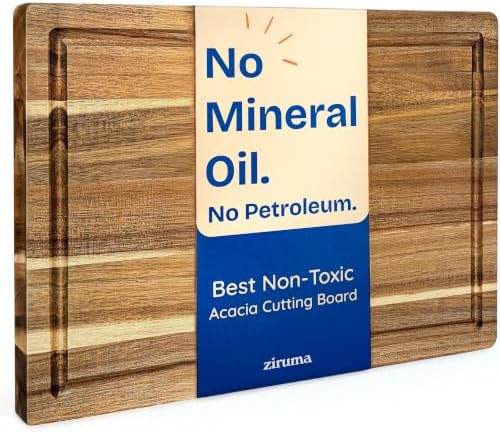
- 𝗙𝗶𝗻𝗶𝘀𝗵𝗲𝗱 𝘄𝗶𝘁𝗵 𝗕𝗲𝗲𝘀𝘄𝗮𝘅 𝗮𝗻𝗱 𝗡𝗮𝘁𝘂𝗿𝗮𝗹 𝗢𝗶𝗹𝘀 – 𝗡𝗼 𝗠𝗶𝗻𝗲𝗿𝗮𝗹 𝗢𝗶𝗹 𝗼𝗿 𝗣𝗙𝗔𝗦: Unlike standard cutting boards, ours is conditioned wit…
- 𝗦𝗼𝗹𝗶𝗱 𝗔𝗰𝗮𝗰𝗶𝗮 𝗪𝗼𝗼𝗱. 𝗡𝗮𝘁𝘂𝗿𝗮𝗹𝗹𝘆 𝗧𝗼𝘂𝗴𝗵 𝗮𝗻𝗱 𝗕𝘂𝗶𝗹𝘁 𝘁𝗼 𝗟𝗮𝘀𝘁: While plastic and bamboo boards often fall short in durability and…
- 𝗠𝗮𝗱𝗲 𝗳𝗿𝗼𝗺 𝗙𝗦𝗖 𝗖𝗲𝗿𝘁𝗶𝗳𝗶𝗲𝗱 𝗪𝗼𝗼𝗱 – 𝗘𝘁𝗵𝗶𝗰𝗮𝗹, 𝗧𝗿𝗮𝗰𝗲𝗮𝗯𝗹𝗲, 𝗧𝗿𝘂𝘀𝘁𝗲𝗱: Most wooden cutting boards don’t reveal where their wood com…
Paid Link
Swap Disposable or Worn-Out Dish Cloths for Reusable Kitchen Towels
Kitchen towels are easy to overlook, but they’re used constantly for drying dishes, wiping counters, and cleaning up everyday messes.
A reusable towel that holds up well through repeated washing can be a more intentional choice than constantly going through disposable products or replacing inexpensive towels that don’t perform well.
A Product to Consider
Geometry Kitchen Towels are a microfiber option designed for quick drying and everyday kitchen use. They’re also available in a variety of colors and patterns, so this is one swap where function doesn’t have to mean sacrificing your kitchen’s look.
They are OEKO-TEX® STANDARD 100 certified. And because kitchen towels are household textiles, this is another place where understanding materials and certifications can be useful. I go more in-depth about household textile certifications, including GOTS and OEKO-TEX®, in my guide to textile labels. See my guide to household textile certifications: Household Textile Certifications: What They Actually Mean

- GEOWEAVE FABRIC: Our tightly woven Geoweave fabric results in an increased drying and cleaning surface area that is perf…
- QUICK-DRYING: Let’s face it, a wet towel can quickly become a smelly towel. Our kitchen tea towels are designed to dry f…
- SUPERIOR CLEANING: Our kitchen tea towels lead the pack when it comes to picking up dirt and spills. With just a little …
Paid Link
Considerations Before You Start Swapping
You don’t need to replace everything in your kitchen overnight.
In fact, I think a better approach is to make these kitchen swaps gradually. When something needs to be replaced, take a few extra minutes to consider what it’s made from, how long it’s likely to last, and whether it actually solves a problem for you.
It’s also worth looking past marketing claims. Words like “natural,” “non-toxic,” and “eco-friendly” don’t tell you the whole story. Understanding what a certification actually covers can give you more useful information than a vague claim on the front of a package.
And ultimately, the goal isn’t to create a perfectly “chemical-free” kitchen. That’s not realistic. It’s about making more informed choices when you have the opportunity to make these kitchen swaps.
Final Thoughts
Creating a more intentional kitchen doesn’t have to mean buying an entirely new set of products.
Start with the things you use every day. Making these kitchen swaps over time is easier than doing it all at once. When it’s time to replace something, consider whether one of these kitchen swaps might be a better fit for your household. Look for materials and products that make sense for you and are built to last.
Small swaps may not completely transform your kitchen overnight, but over time, they can change the way you shop and help you become more thoughtful about what you bring into your home.
Common Questions About Kitchen Swaps
What are the best kitchen swaps to make first?
Start with products you use frequently or ones that need replacing anyway. Food storage containers, cutting boards, utensils, dishwashing products, and kitchen towels can all be practical places to start.
What can I use instead of plastic food containers?
Glass containers are one option for storing leftovers and meal prep. Many are reusable and can be designed for refrigerator, freezer, or microwave use, depending on the product.
Are silicone utensils better than plastic utensils?
Silicone and plastic have different characteristics. If you’re considering silicone, look at the quality of the product, its heat rating, materials, and care instructions rather than assuming silicone is automatically better.
Are wooden cutting boards better than plastic?
Neither material is automatically best for everyone. Wooden boards can be durable and long-lasting but generally require more care than some plastic boards.
What should I look for when replacing kitchen products?
Consider the materials, durability, how often you’ll use the product, how you’ll clean it, and what information the manufacturer provides. Certifications can also be useful when they apply to the specific material or claim you’re evaluating.
Do I need to replace all my kitchen products at once?
No. Replacing products gradually as they wear out or need replacing can be a more practical approach than throwing away perfectly usable items.
Are these kitchen swaps safer?
These swaps are suggestions for people who want to make more intentional choices about the products they use. A different material or product isn’t automatically safer simply because it’s marketed as natural, non-toxic, or eco-friendly.