6 Household Textile Certifications You Should Know
This article may contain affiliate links. As an Amazon Associate, I earn from qualifying purchases at no additional cost to you.
Why Textile Certifications Matter
When you’re shopping for sheets, towels, rugs, blankets, or other household textiles, you’ll probably see certifications like GOTS, OEKO-TEX®, and others. But what do those labels actually mean?
A certification can give you information about how a textile was made, what materials were used, or whether it was tested against certain substances. The important part is knowing what each certification actually covers, because they don’t all evaluate the same things.
Which Household Textile Certifications Should You Know?
There isn’t one certification that covers everything. GOTS focuses on organic fibers and how textiles are processed and made. OEKO-TEX® STANDARD 100 focuses on testing for potentially harmful substances. GRS and RCS verify recycled content, and FSC addresses responsible sourcing of forest-based materials.
What Certifications Can and Can’t Tell You
Certifications can be a helpful starting point when you’re comparing products, but they aren’t a guarantee that a product is perfect in every way.
Depending on the certification, it may address things like material sourcing, chemical testing, manufacturing practices, recycled content, or environmental standards. It doesn’t necessarily tell you how comfortable, durable, or well-made a product will be.
That’s why I don’t just look at the certification itself; I consider it alongside the materials, construction, brand transparency, and how the product is actually made.
Certifications to Know
GOTS (Global Organic Textile Standard)
What is it?
GOTS is a third-party certification for textiles made with certified organic fibers. What makes it different from simply seeing “organic cotton” on a product is that GOTS looks at more than the starting material. Its requirements extend through processing and manufacturing, with standards for things like chemical use, environmental practices, and social responsibility. [GLOBAL ORGANIC TEXTILE STANDARD (GOTS) VERSION 8.0]
What does it certify?
GOTS covers a pretty broad part of the textile supply chain, from processing the fibers through manufacturing and labeling. The standard includes requirements for organic fiber content, chemical inputs, environmental practices, human rights and social criteria, and product quality. [GLOBAL ORGANIC TEXTILE STANDARD (GOTS) VERSION 8.0]
For me, the chemical requirements are one of the more useful parts. GOTS doesn’t claim that textiles are “chemical-free.” Instead, it sets requirements around which chemical inputs can be used and how they are handled.
What products will you see it on?
GOTS certification can be found across a wide range of textile products, including clothing and household goods. For this guide, we’re focusing specifically on the household textiles you’re most likely to encounter, such as:
- Sheets and bedding
- Towels
- Blankets and throws
- Mattresses and mattress covers
- Rugs
- Curtains
- Upholstery
- Table linens
- Kitchen textiles
Why I look for it
GOTS is one of the certifications I look for when I’m shopping for organic textiles because I want to be more intentional about the materials and products I bring into my home. I’m not trying to find products that are completely “chemical-free,” because that’s not really how materials work. I’m looking for products where unnecessary chemicals, treatments, and processing are limited when better options are available.
That’s why I like that GOTS looks at more than whether the fiber itself is organic. It gives me another way to look at how a textile was processed and made, rather than relying on a simple “organic cotton” claim.
Good to Know
Not all GOTS products contain 100% certified organic fibers. The current standard has different label grades. Products labeled “Organic” must contain at least 95% certified organic fibers, while products labeled “Made with organic materials” must contain at least 70%. [GOTS Labeling]
GOTS also doesn’t tell you everything about a product. It doesn’t mean the sheets will be softer, the towel will last longer, or that you’ll personally love the way it feels. I see certification as one piece of the decision, alongside the material, construction, durability, and overall quality.
You can also verify a GOTS product by checking the license number on its label against the GOTS Certified Suppliers Database. [GOTS Labeling]
Examples of Products with GOTS Certification


Paid Link
OEKO-TEX® STANDARD 100
What is it?
OEKO-TEX® STANDARD 100 is a third-party certification that tests textiles for a wide range of substances that can be harmful to human health. The testing can include the finished textile as well as its individual components, such as thread, buttons, and other accessories. [Factsheet OEKO-TEX® STANDARD 100]
What does it certify?
The standard sets limits for more than 1,000 substances and updates its requirements regularly. How strict the testing is depends on how the product is used. For example, bedding that has direct contact with your skin falls under a stricter product class than something like a curtain.
The four product classes range from products for babies and young children to home and decorative textiles. [OEKO-TEX® standards]
What products will you see it on?
You’ll commonly see OEKO-TEX® STANDARD 100 on:
- Sheets and bedding
- Towels
- Blankets and throws
- Mattresses and mattress textiles
- Rugs
- Curtains
- Upholstery
- Other household textiles
OEKO-TEX® also certifies clothing and children’s products, but those will be covered at a later time.
Why I look for it
This is probably the most straightforward certification on my list when I’m trying to avoid unnecessary chemical exposure in the products I use at home. Textiles are something I sleep on, wrap myself in, and use regularly; I’d rather choose one that has been tested for a broad range of potentially harmful substances.
It’s not the only thing I consider, but it’s useful when I’m comparing otherwise similar products.
Good to Know
OEKO-TEX® STANDARD 100 doesn’t mean a product is organic, sustainably made, or made from natural materials. It also isn’t a measure of overall product quality. The certification focuses on testing for harmful substances, so you’ll still want to consider the material, construction, durability, and other factors when choosing a product. [OEKO-TEX® standards]
You can also verify an OEKO-TEX® label by entering its certificate or label number into the official OEKO-TEX® Label Check. [OEKO-TEX® Label Check]
Examples of Products with OEKO-TEX® STANDARD 100 Certification


Paid Link
OEKO-TEX® MADE IN GREEN
What is it?
OEKO-TEX® MADE IN GREEN is a product label for textiles that have been tested for harmful substances and made under environmentally and socially responsible production conditions. It also adds supply-chain traceability, which is something STANDARD 100 doesn’t emphasize as much. [Standard OEKO-TEX® MADE IN GREEN].
What does it certify?
MADE IN GREEN brings several pieces together. The finished product must meet OEKO-TEX® safety requirements, while the facilities involved in producing it must meet OEKO-TEX® STeP requirements for areas such as chemical management, environmental practices, worker safety, and working conditions. The supply chain also has to be traceable. [OEKO-TEX® STeP]
Basically, it’s looking at both what’s in the product and how the product was made.
What products will you see it on?
For household textiles, you may see MADE IN GREEN on:
- Sheets and bedding
- Towels
- Blankets and throws
- Mattresses and mattress covers
- Rugs
- Curtains
- Upholstery
- Other household textiles
It can also be used on clothing and leather products, but those will be covered at a later time.
Why I look for it
This is one I really like because I can also see information about where and how it was produced. When I’m trying to make more intentional choices for my home, that kind of transparency matters to me. I’d rather have some actual information about the product and its supply chain than rely on a vague “responsibly made” claim.
Good to Know
MADE IN GREEN doesn’t mean a product is organic, and it doesn’t mean every aspect of the product is environmentally perfect. It’s also not a guarantee that you’ll love the quality or feel of the textile.
One of the most useful features is the unique product ID or QR code. You can use OEKO-TEX®’s Label Check to see information about the product’s manufacturing facilities, production steps, and countries involved. [Discover the MADE IN GREEN Label Check]
Example of Product with OEKO-TEX® MADE IN GREEN Certification

Paid Link
GRS (Global Recycled Standard)
What is it?
The Global Recycled Standard (GRS) is a third-party certification that verifies recycled materials and tracks them through the supply chain. It was created to give brands and consumers a way to verify that products claiming recycled content actually contain qualifying recycled material. [What is the Global Recycled Standard (GRS)?]
What does it certify?
GRS looks at more than the recycled material itself. Certified facilities also have to meet requirements related to social and environmental practices, chemical use, and traceability throughout the supply chain.
For a product to carry a consumer-facing GRS claim, it must contain at least 50% recycled content. [The RCS and GRS are designed to boost the use of recycled materials]
What products will you see it on?
For household textiles, you may come across GRS certification on:
- Rugs
- Curtains
- Upholstery
- Blankets and throws
- Bedding
- Towels
- Other textiles made with recycled fibers
You’ll often see it used for products containing recycled polyester, although GRS isn’t limited to one particular fiber.
Why I look for it
When I see GRS, I know the recycled-content claim isn’t just something the brand came up with for its product description. There’s a system in place to verify the material and track it through the supply chain.
I also like that GRS considers what happens during processing. If I’m choosing a product made with recycled materials, I’d rather have some information about how those materials were handled than simply see “made from recycled materials” on the packaging.
Good to Know
GRS doesn’t mean a product is made entirely from recycled materials, and it doesn’t mean the product is automatically the most sustainable option available.
It’s also worth remembering that GRS focuses on the recycled-content claim and the certified supply chain. It isn’t a certification for overall product quality, and it doesn’t tell you whether a textile will be comfortable, durable, or the right choice for your particular needs.
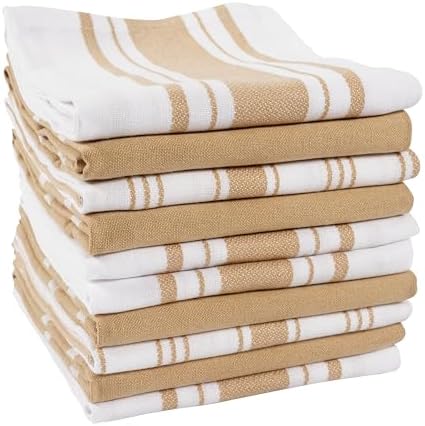
Examples of Products with GRS

Paid Link
RCS (Recycled Claim Standard)
What is it?
The Recycled Claim Standard (RCS) is a third-party certification that verifies recycled materials and tracks them through the supply chain. Its main purpose is to make sure a product’s recycled-content claim can be traced back to legitimate recycled material. [The RCS and GRS are designed to boost the use of recycled materials]
What does it certify?
RCS focuses specifically on the recycled content and its chain of custody. That means certified materials are tracked as they move through the different stages of production.
Unlike GRS, RCS doesn’t evaluate broader environmental or social practices, or the use of chemicals during production. That’s the biggest distinction between the two. [What are the main differences between the Global Recycled Standard (GRS) and the Recycled Claim Standard (RCS)?]
RCS can be used for products containing at least 5% recycled material. [Standards FAQs]
What products will you see it on?
For household textiles, you may see RCS certification on products such as:
- Rugs
- Curtains
- Upholstery
- Blankets and throws
- Bedding
- Towels
- Other textiles made with recycled fibers
Why I look for it
I see RCS as a useful way to verify a recycled-content claim. If a product is advertised as being made with recycled materials, I want to know there’s actually a system for tracking those materials through the supply chain.
It’s not necessarily a certification that would make me choose one product over another on its own, but it gives me more confidence that the recycled-content claim isn’t just a marketing phrase.
Good to Know
RCS is narrower than GRS. It verifies the recycled material and tracks it through the supply chain, but it doesn’t assess the product’s overall environmental impact, working conditions, or chemical management. [What are the main differences between the Global Recycled Standard (GRS) and the Recycled Claim Standard (RCS)?]
So if you’re deciding between two otherwise similar products, I’d look at the scope of the certification rather than assuming RCS and GRS mean the same thing.
FSC (Forest Stewardship Council)
What is it?
The Forest Stewardship Council (FSC) is a certification system focused on responsible forestry and the materials that come from forests. While you may know FSC from wood and paper products, it can also apply to certain textiles made from forest-based fibers, such as viscose, rayon, modal, and lyocell. [Fashion & Textiles]
What does it certify?
For textiles, FSC helps verify that forest-based materials come from responsibly managed sources and can be traced through the supply chain. It focuses on sourcing the forest-based material, not on testing the finished textile for harmful substances. [Fashion]
FSC doesn’t mean that a textile is organic or that it has been tested for chemicals. It primarily tells you where a forest-based material came from and how it was sourced.
What products will you see it on?
For household textiles, FSC certification may show up on products made with forest-based fibers, including:
- Sheets and bedding
- Curtains
- Towels
- Upholstery and furniture covers
- Other textiles made with viscose, rayon, modal, or lyocell
FSC’s current product classifications specifically include home furnishings such as bed sheets, towels, curtains, and furniture covers. [Standard Addendum Product Classification]
Why I look for it
I pay attention to FSC when I’m considering products made from tree-based fibers because I want to know where those materials came from. A material being “plant-based” or “made from trees” doesn’t automatically tell me that the forests behind it were responsibly managed.
FSC gives me another piece of information to consider when I’m trying to choose products with more thoughtfully sourced materials.
Good to Know
FSC is not a textile-safety certification. It doesn’t tell you that a sheet or towel is free from certain chemicals, and it doesn’t mean the product is organic.
It’s also worth looking at the actual FSC claim rather than assuming the entire product has been evaluated in the same way. FSC certification can involve different parts of the supply chain, so the label and certification details matter. FSC provides a public database where certification and licensing information can be checked. [FSC search]
Certification vs. Marketing Claims
You’ll often see words like natural, non-toxic, eco-friendly, and organic when shopping. These terms don’t all mean the same thing, and some have much more specific requirements than others.
- “Natural” → This can be a vague marketing term and can be difficult to evaluate on its own. There isn’t one universal standard that tells you exactly what a company must use or avoid when describing a consumer product as natural. [FTC Issues Revised “Green Guides”]
- “Non-toxic” → This is a marketing claim. Seeing this phrase doesn’t mean a product has received a particular certification. Companies making this type of safety claim should have appropriate evidence to support it, so I wouldn’t treat the phrase itself as proof that a product has been independently tested. [Environmental Claims: Summary of the Green Guides]
- “Eco-friendly” → This is a broad environmental claim. Without additional information, it can be difficult to know what aspect of a product is supposed to be better for the environment. [Environmental Claims: Summary of the Green Guides]
- “Organic” → This term requires a little more context. Certain organic claims, including those involving textiles, can be subject to specific USDA requirements. So when you see “organic,” it’s worth checking which standard or certification backs up the claim rather than assuming every product using the word meets the same criteria. [FTC Issues Revised “Green Guides”]
This is one reason I find third-party certifications useful. They give you something more concrete to investigate, like who established the requirements, what was evaluated, and what a product actually had to meet to carry that certification.
Which Certifications Matter Most for Different Textiles?
| Certification | What is it? |
|---|---|
| GOTS (Global Organic Textile Standard) | Organic fibers + requirements for how the textile is processed and made |
| OEKO-TEX® STANDARD 100 | Tests the textile and its components for potentially harmful substances |
| OEKO-TEX® MADE IN GREEN | Harmful-substance testing + more responsible production + supply-chain traceability |
| GRS (Global Recycled Standard) | Verifies recycled content + requirements for processing and supply-chain practices |
| RCS (Recycled Claim Standard) | Verifies recycled content and tracks it through the supply chain |
| FSC (Forest Stewardship Council) | Verifies responsible sourcing of forest-based materials |
Considerations When Shopping for Household Textiles
Certifications can be helpful, but they’re only one part of choosing a household textile. Before buying, consider:
- Certification: Look at which certifications the product carries and what each one actually covers. More certifications don’t necessarily mean a better product.
- Materials: Check what the textile is made from, including the main fibers, blends, dyes, and finishes when that information is available.
- Marketing Claims: Be cautious with broad claims like “natural,” “eco-friendly,” or “non-toxic.” Look for specific information or certifications that support what the brand is claiming.
- Transparency: Consider how much information the company provides about its materials, manufacturing, sourcing, and supply chain. A brand that clearly explains its products gives you more to work with when making a decision.
- Durability: Consider how well the product is likely to hold up over time. A certified product isn’t necessarily durable, and how often you replace it can matter just as much as how it was originally made.
- Care: Check the washing and care instructions before buying. A textile that requires special treatment may not be the most practical choice for your home.
- Overall value: Look at the product as a whole, including its materials, certifications, construction, durability, care requirements, and price. A certification can be a useful piece of the puzzle, but it shouldn’t be the only factor.
The goal is for you to understand what you’re buying and choose the standards that matter most for your needs.
Commonly Asked Questions About Household Textile Certifications
Is GOTS better than OEKO-TEX®?
Not necessarily. They focus on different things. GOTS covers organic fibers along with requirements for processing, manufacturing, chemical inputs, environmental practices, and social criteria. OEKO-TEX® STANDARD 100 focuses specifically on testing textiles and their components for potentially harmful substances. The better certification depends on what you’re looking for.
Does OEKO-TEX® mean a product is organic?
No. OEKO-TEX® STANDARD 100 does not certify that a product is made with organic fibers. Its focus is testing for potentially harmful substances. If organic materials are important to you, look for a certification such as GOTS that specifically addresses organic fiber content.
What is the difference between GOTS and OEKO-TEX®?
GOTS and OEKO-TEX® answer different questions. GOTS looks at organic fiber content and how the textile is processed and manufactured, while OEKO-TEX® STANDARD 100 focuses on testing the textile and its components for potentially harmful substances. A product can have one certification, the other, or both.
Is OEKO-TEX® STANDARD 100 safe?
OEKO-TEX® STANDARD 100 means the certified product has been tested against OEKO-TEX® requirements for a wide range of potentially harmful substances and meets the applicable limits. However, I wouldn’t interpret the certification as a guarantee that a product is completely “safe” or free from every substance of concern. It tells you specifically what the certification has evaluated.
What is the difference between GRS and RCS?
Both certifications verify recycled content and track it through the supply chain. GRS goes further by adding requirements related to areas such as environmental practices, chemical management, and social conditions. RCS has a narrower focus on verifying and tracking recycled material.
Does FSC certification apply to textiles?
Yes. FSC can apply to textiles made with forest-based fibers, such as certain viscose, modal, rayon, and lyocell products. FSC focuses on the responsible sourcing and traceability of the forest-based material. It does not certify that the finished textile is organic or free from potentially harmful substances.
Do household textiles need to have a certification?
No. Certifications aren’t required for most household textiles, and the absence of a certification doesn’t automatically mean a product is poorly made or unsafe. Certifications are simply one tool you can use to learn more about a product. What matters most is understanding what a certification covers and deciding which factors are important to you.
Final Thoughts
Understanding textile certifications doesn’t have to mean memorizing a collection of logos and acronyms. The important thing is knowing what each certification actually tells you and what it doesn’t.
GOTS, OEKO-TEX®, GRS, RCS, and FSC each look at different parts of a textile’s materials, production, or sourcing. None of them tells you everything about a product, but each can give you useful information that you wouldn’t get from a vague “natural” or “eco-friendly” claim alone.
You also don’t need to find a product with every certification. Start with what matters most to you, look beyond the marketing, and consider the materials, quality, durability, and overall construction too.
The goal isn’t to find a perfect product. It’s to have enough information to make a choice you feel good about and to be a little more intentional about what you bring into your home.
Sources & Further Reading
GOTS
- https://global-standard.org/images/resource-library/documents/standard-and-manual/GOTS_v8.0_signed.pdf
- https://global-standards.org/our-standards/gots/labelling
- https://global-standards.org/
STANDARD 100
- https://www.oeko-tex.com/fileadmin/user_upload/Marketing_Materialien/STANDARD_100/Factsheet/STANDARD_100/OEKO-TEX_STANDARD_100_Factsheet_EN.pdf
- https://www.oeko-tex.com/en/our-standards/oeko-tex-standard-100
- https://www.oeko-tex.com/en/label-check/
MADE IN GREEN
- https://www.oeko-tex.com/fileadmin/user_upload/Marketing_Materialien/MADE_IN_GREEN/Standard/OEKO-TEX_MADE_IN_GREEN_Standard_EN.pdf
- OEKO-TEX® STeP
- Discover the MADE IN GREEN Label Check
GRS
GRS and RCS
- https://textileexchange.org/recycled-claim-global-recycled-standard/
- https://textileexchange.org/faq/what-are-the-main-differences-between-the-global-recycled-standard-grs-and-the-recycled-claim-standard-rcs/
RCS
FSC
- https://us.fsc.org/business-resources/fashion-textiles
- https://fsc.org/en/businesses/fashion
- https://connect.fsc.org/sites/default/files/2025-01/FSC-STD-40-004a_V3-0_D1-2%20Product%20Classification.pdf
- https://search.fsc.org/en/?tab=certificates-list