EARTHLY CO. NOTPAPEr TOWELS

Soft, full-size cotton flannel towels available in solid colors and prints.
EARTHLY CO. • CHECK CURRENT PRICE
Compare the best reusable paper towels by material, size, care, and everyday use to find the option that fits naturally into your cleaning routine.
This post contains affiliate links. If you purchase through one of these links, I may earn a commission at no additional cost to you. As an Amazon Associate, I earn from qualifying purchases.
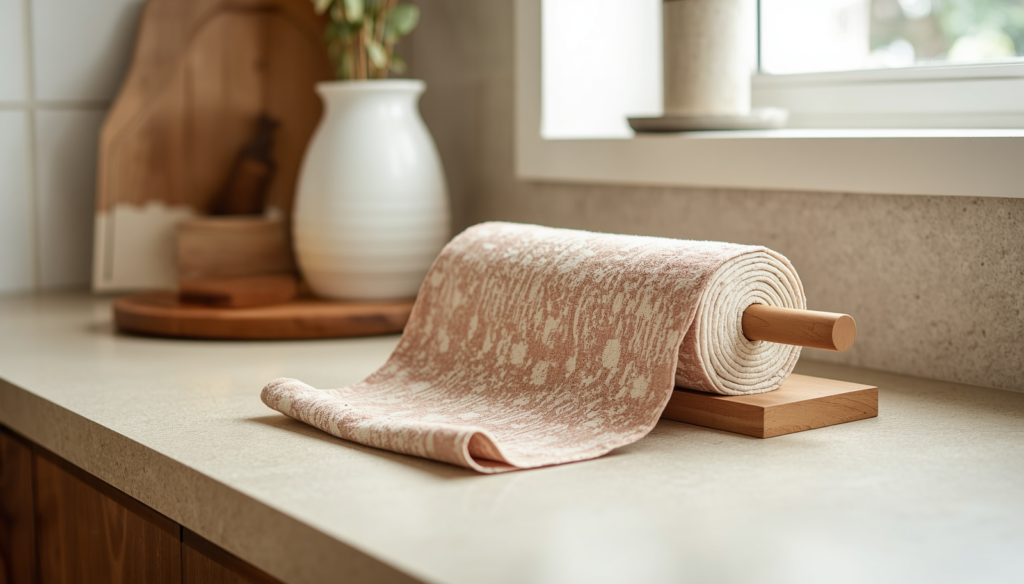
Reusable paper towels sound like a simple swap until you start looking at the different options. Some are soft cotton squares that you toss in the laundry. Others are made from cellulose, feel stiff when dry, soften when wet, and can be rinsed right at the sink. Some even come on a roll, so using them doesn’t feel all that different from reaching for a regular paper towel.
The best choice really depends on what you use paper towels for and how much upkeep you’re comfortable with. Something that works well for drying your hands might not be what you want for a sticky counter, a big spill, or the little messes that come up throughout the day.
Reusable paper towels are only useful if they’re convenient enough to become part of your routine. A thicker cotton set might work well if you already wash kitchen linens regularly. If you’d rather rinse something at the sink and leave it to dry, a small Swedish dishcloth may be a better fit.
Labels like “eco-friendly” or “zero waste” don’t tell you much about what a towel is actually like to use. How it fits into your home and cleaning habits matters more.
Four options for four different cleaning routines.
Soft, full-size cotton flannel towels that work for spills, counters, hands, and casual napkins.
Organic cotton flannel with sewn edges and a familiar roll-style setup.
Compact cellulose-and-cotton cloths that rinse easily and dry quickly on a hook.
Large tear-off sheets on a roll for households that want the easiest transition.
Reusable paper towels work best when you choose them around your real cleaning habits instead of the most impressive product claim.
Cotton flannel feels soft and familiar, which makes it a good choice for drying hands, wiping up spills, cleaning counters, or using in place of paper napkins. It can become more absorbent after a few washes, but the trade-off is more laundry and a longer drying time.
Cellulose-and-cotton cloths, often called Swedish dishcloths, are quite different. They’re thin and stiff when dry but soften once you get them wet. They’re easy to rinse out at the sink and usually dry faster than thicker cotton towels, though their smaller size can make them less practical for bigger messes.
You’ll also come across reusable towels labeled as bamboo. Take a closer look at the fiber content. Some are actually made from rayon or viscose derived from bamboo, which is a processed fiber rather than raw bamboo fabric. That doesn’t necessarily make them a bad choice, but I wouldn’t buy a towel based on the word “bamboo” alone.
A larger towel gives you more surface area for drying hands, wiping dishes, or tackling bigger spills. A small Swedish dishcloth is easier to wring out and hang to dry, but it can feel a little limiting when you have a larger mess to clean up.
Care matters just as much. Some reusable towels can go straight into the washer and dryer with your regular kitchen laundry. Others are meant to be rinsed at the sink, washed on the top rack of the dishwasher, or machine-washed and left to air-dry. Before buying, think about which routine you’ll actually stick with.
Storage is worth considering too. Cotton flannel squares can be rolled back onto a standard paper towel holder, though that does mean an extra step after laundry. Swedish dishcloths can simply hang from a hook and take up very little space. And with cotton towels, you’ll need somewhere breathable to keep the used ones until laundry day.


Earthly Co. notpaper Towels are a versatile choice if you want something that feels more like a soft household towel than a sponge. They’re made from double-brushed 100% cotton flannel and measure 13 by 10.5 inches before the slight shrinkage that can happen in the wash.
The larger size makes them handy for more than small spills. You can use them as hand towels, casual cloth napkins, or everyday cleaning cloths too. The flannel also naturally clings to the other towels when rolled onto a standard paper towel holder, so there’s no need for snaps and they’re still easy to grab in the kitchen.
This set makes the most sense for someone who wants one soft, full-size towel to handle several everyday jobs and does not mind adding the used towels to regular laundry.
EXPLORE EARTHLY CO.Affiliate Link. Pricing and availability may change.
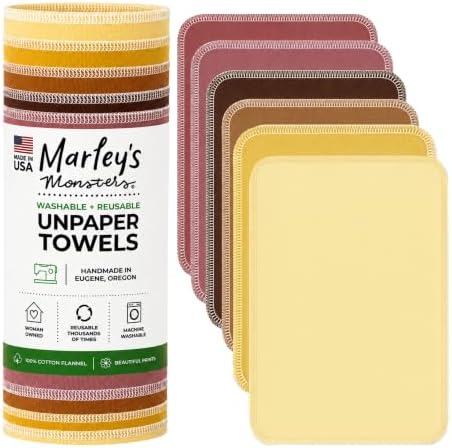
Marley’s Monsters offers a roll-style option made from single-ply 100% organic cotton flannel. Each towel measures about 12 by 10 inches, with sewn edges that help prevent fraying. They come rolled on a reusable kraft tube that fits most standard paper towel holders, and the flannel naturally clings together without snaps.
The fabric isn’t prewashed, so expect some shrinkage. The brand recommends washing the towels before using them, as they become more absorbent after the first few washes. They can be machine-washed with like colors and tumble-dried on low. Skip the fabric softener, since it can make the towels less absorbent.
Best For: Someone who wants organic cotton, neutral colors, and sturdy sewn edges.
Main tradeoff: They’re a more expensive option, and you’ll still need to wash and reroll them between uses.
Affiliate Link. Pricing and availability may change.
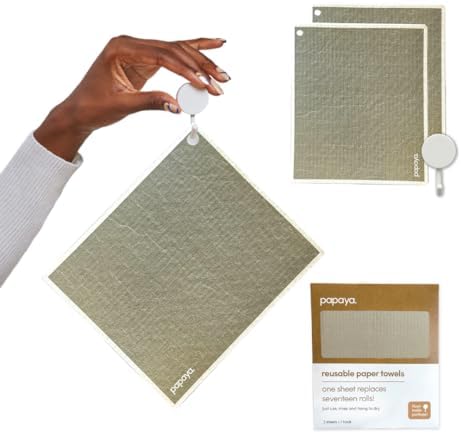
Papaya towels are more like Swedish dishcloths than traditional fabric towels. They’re made from 70% cellulose and 30% cotton and measure 6.6 by 7.8 inches. They feel stiff when dry but soften once you run them under water.
For everyday cleaning, you can rinse the towel with soap and water, wring it out, and hang it to dry. Papaya also says the towels can go on the top rack of the dishwasher or in the washing machine when they need a deeper clean. They should be air-dried, since putting them in the dryer may cause shrinkage.
Best For: Wiping countertops, appliances, vanities, and small spills throughout the day.
Main Tradeoff: The smaller size is easy to rinse and wring out, but it may feel limiting for drying dishes or tackling a bigger spill.
Affiliate Link. Pricing and availability may change.
Ecozoi towels come in 20-sheet rolls, with each sheet measuring about 11 by 11 inches. The familiar size and tear-off format can make the switch feel less drastic, especially in a household where everyone is used to reaching for the paper towel holder.
They’re often marketed as bamboo towels, though a more precise description is rayon or viscose derived from bamboo blended with cotton. Independent testing has found the sheets absorbent and durable. Unlike some reusable towel sets, though, they aren’t meant to stay together as a roll. Once you’ve separated and washed them, you’ll need to store the clean sheets in a stack.
Best For: Someone who wants to cut back on disposable paper towels without completely changing the habit of reaching for a roll.
Main Tradeoff: The fiber is more processed than the “bamboo” label might suggest, and you’ll need somewhere to store the individual sheets after washing.

Affiliate Link. Pricing and availability may change.
A side-by-side look at the four options, based on the details that matter most in an everyday kitchen.
100% cotton flannel; approx. 13 × 10.5 in.; 10 or 24 towels
Soft, full-size everyday use
Machine wash; Tumble dry
100% organic cotton flannel; approx. 12 × 10 in.; 12 or 24 towels
Organic cotton and roll-style storage
Machine wash; Tumble dry low
70% cellulose, 30% cotton; 6.6 x 7.8 in.
Quick counter cleanup and fast drying
Rinse, dishwasher, or machine wash; air-dry
Rayon/viscose derviced from bamboo with cotton; approx. 11 x 11 in.; 20 sheets per roll
Familiar tear-off format
Hand or machine wash
Words like “sustainable,” “natural,” “zero waste,” and “bamboo” can sound impressive, but they don’t tell you much about what the towel is actually like to use. How does it feel? How do you wash it? Where does it go when it’s dirty? Those details matter a lot more when you’re deciding whether it will work in your kitchen.
Start with the messes you clean most often, then choose a material and care routine that won’t feel like extra work.
Compare The OptionsMaterial, size, care, and storage determine whether reusable paper towels become a natural part of your kitchen or another product that sits unused.
Soft cotton towels and quick-drying cellulose-blend cloths create very different routines.
A practical range for households that want enough clean towels between laundry days.
Often enough for a starter rotation because each cloth can be rinsed and reused between deeper washes.
Useful for raw meat juices, heavy grease, paint, pet accidents, broken glass, and other messes you would rather discard.
Reusable towels can cut down on everyday paper towel use, but they aren’t completely effortless. You’ll still need to wash, dry, and store them, so it helps to know what you’re signing up for before making the switch.
Reusable paper towels make the most sense if you reach for paper towels mainly for everyday kitchen cleanup. They’re particularly easy to work into your routine if you already use and wash kitchen towels.
A big set of reusable towels probably isn’t worth it if taking care of them will annoy you more than using them will help.
These four options cover different materials and routines. Choose the one that best matches how you actually clean rather than buying the largest set first.
Affiliate Links. Pricing and availability may change.
Soft, full-size cotton flannel towels available in solid colors and prints.
EARTHLY CO. • CHECK CURRENT PRICE
Compact cellulose-and-cotton cloths with a rinse-and-hang routine.
Large tear-off sheets for a transition that feels closer to a standard roll.
Organic cotton flannel with sewn edges and a reusable kraft tube.
The best reusable paper towel is the one that fits naturally into the way you already clean. Of the options in this guide, Earthly Co. notpaper Towels are my top overall pick. They’re soft, generously sized, machine washable, and useful for more than wiping up the occasional counter spill.
That doesn’t mean cotton is the right choice for everyone. If you’d rather rinse one cloth at the sink than collect a basket of kitchen laundry, Papaya may be a better fit. If organic cotton is your priority, Marley’s Monsters stands out. And if your household is used to grabbing a sheet straight from a roll, Ecozoi makes the transition feel a little more familiar.
You don’t have to give up disposable paper towels completely, either. Using reusable towels for everyday messes while keeping a regular roll around for the jobs you’d rather clean up and throw away is a perfectly practical middle ground.