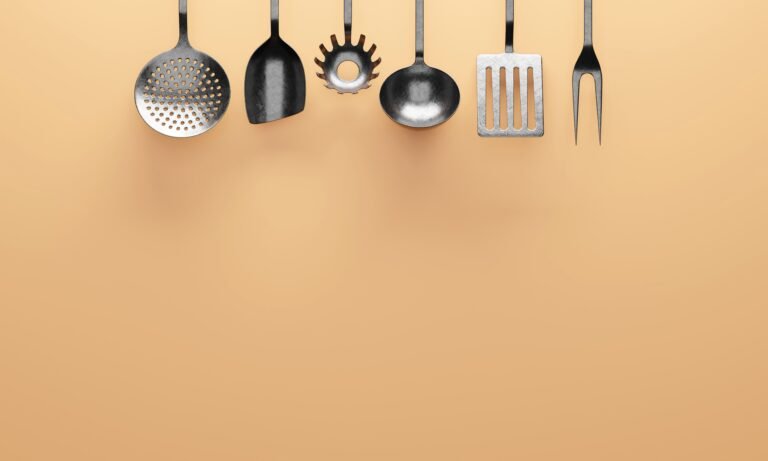
6 Best Stainless Steel Cooking Utensils for Everyday Cooking
Compare six stainless steel cooking utensils, including a practical set and the five tools most kitchens actually need.
Stainless steel is generally the better choice for durability, high-heat cooking, and long-term versatility. Ceramic cookware can be easier to use with foods that tend to stick. The better option comes down to what matters more to you: long-term durability and versatility or easier food release.
The stainless steel vs. ceramic cookware debate sounds like it’s just about materials, but in everyday cooking, it comes down to how you actually use your pans. What do you cook most often? How much technique are you willing to learn? And are you okay replacing a coated pan once its food release starts to fade?
Best for: browning, searing, sauces, and long-term use.
View the stainless picks.
Best for: eggs, delicate food, and easier cleanup.
View the ceramic picks.
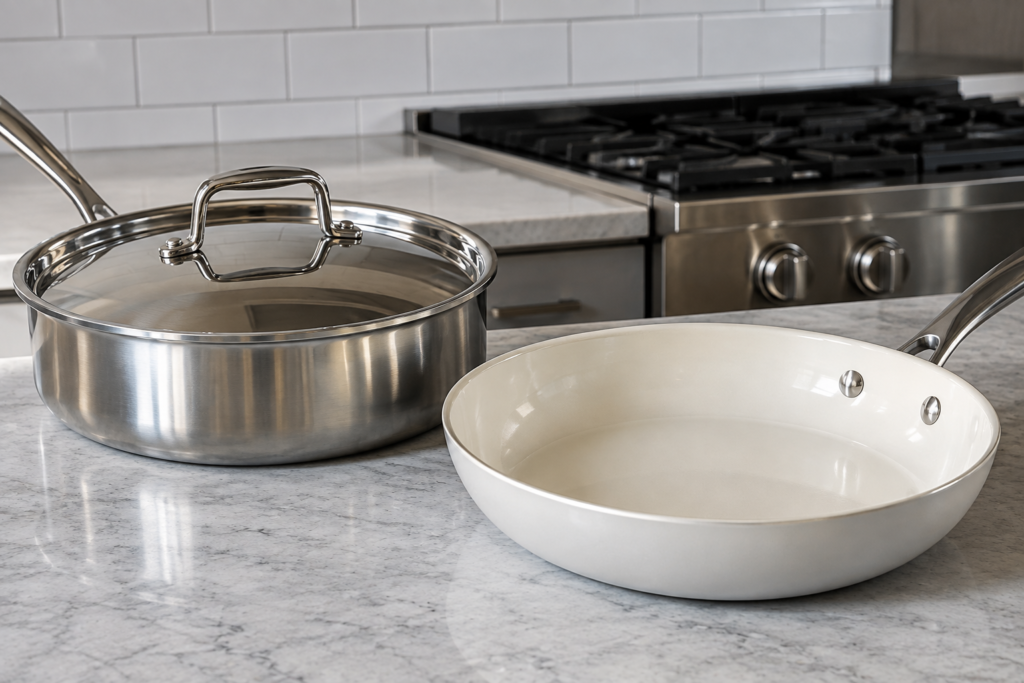
If you just want the practical differences, start here. In this table, “ceramic” refers to the ceramic-coated cookware most people see when shopping, not cookware made entirely from ceramic.
| Factor | Stainless steel | Ceramic cookware |
|---|---|---|
| Food release | Technique-dependent | Easier, especially when new |
| High heat | Excellent for searing and browning | Usually best on low to medium heat |
| Durability | Can last for decades | Easy-release performance gradually fades |
| Learning curve | Higher | Lower |
| Maintenance | No seasoning; may need soaking or polish | Gentle utensils, moderate heat, careful storage |
| Coating | None on uncoated stainless | Usually a ceramic nonstick coating over metal |
| Best for | Browning, searing, sauces, oven use | Eggs, pancakes, fish, quick cleanup |
My Take: Start with stainless steel if you want one dependable, do-it-all pan. If eggs and other delicate foods regularly give you trouble, add a ceramic skillet for those jobs.
THE LONG-LIFE WORKHORSE
Stainless steel cookware usually has a stainless steel cooking surface with a heat-conducting layer of aluminum or copper underneath. In fully clad cookware, that inner layer extends across the bottom and up the sides of the pan. Your food cooks directly on stainless steel, with no added nonstick coating on the cooking surface.
The surface is durable, handles acidic foods well, and works with metal utensils and oven heat. The tradeoff is food release. Eggs, fish, and other delicate foods can stick if the temperature isn’t right or there isn’t enough fat in the pan.
Most cookware labeled “ceramic” is actually aluminum or stainless steel with a ceramic nonstick coating. That coating gives you the easy food release people like for eggs, pancakes, and delicate fish. It can make cooking easier, especially at first, but it’s still a coating, and its performance can change over time depending on heat, wear, and how you clean it.
Fully ceramic cookware is different. Instead of a ceramic coating over a metal pan, the cookware itself is made from ceramic material. It’s less common, usually heavier, and more prone to breaking, so it shouldn’t be treated as the same thing as a ceramic-coated skillet.
Neither material is best for every meal. The better choice often comes down to what you’re cooking.
SEARING, BROWNING, & HIGH HEAT
A properly preheated stainless steel pan is better suited to browning and leaves behind fond you can turn into a pan sauce. Ceramic can brown food too, but regularly using high heat can shorten the life of the coating.
Uncoated stainless steel is the more forgiving choice for searing, finishing food in the oven, and recipes that go from the stovetop to the broiler. Just check the temperature limits for your specific pan, including the handle and lid.
A newer ceramic pan makes eggs, pancakes, and delicate fish easier to cook with less sticking and cleanup. Stainless steel can handle those foods too, but getting good results takes more attention to heat and cooking fat.
Stainless steel has the clear advantage here. A good stainless steel pan can handle scratches, discoloration, stuck-on food, and years of regular use. It may pick up some cosmetic marks along the way, but there’s no nonstick coating to wear down or lose its food release.
Ceramic cookware can stay usable for years, but its nonstick performance may fade much sooner. How quickly that happens depends on how you use and care for the pan, including cooking temperature, utensils, oil sprays, dishwasher use, and storage. There’s no reliable one-size-fits-all lifespan, so the manufacturer’s care instructions are usually more useful than a fixed timeline.
If you want cookware you can keep for years and don’t mind learning a few techniques, stainless steel is the better choice. If easy food release matters more and you’re comfortable replacing the pan once the coating wears down, ceramic can still be a practical addition to your kitchen.
No coating
Stainless has no easy-release layer to wear away.
Gentle care
Ceramic lasts best with moderate heat and softer utensils.
Ceramic is usually easier to deal with on a rushed morning. Food releases more easily, and once the pan cools, cleanup may take little more than a soft sponge. The tradeoff is that ceramic coatings need gentler care. Manufacturers commonly recommend low to medium heat, a little oil or butter, softer utensils, and avoiding cooking sprays.
Even if a ceramic pan is labeled dishwasher-safe, that doesn’t necessarily mean the dishwasher is the best choice for preserving the coating. Handwashing is usually the gentler option.
STAINLESS: MORE TECHNIQUE
Stainless steel takes a little more patience. Preheat the pan over low to moderate heat, add oil, and give food time to release naturally before trying to move it. If something does stick, a short soak usually takes care of the mess. For stubborn discoloration, a cleaner made for stainless steel can help.
Stainless steel has a learning curve, but once you get the hang of it, you can cook without worrying about protecting a nonstick coating.
Uncoated stainless steel doesn’t rely on a PFAS-based nonstick coating. Ceramic-coated cookware may be labeled PFAS-free, but “ceramic” alone doesn’t guarantee that. Check the specific product and the manufacturer’s documentation before buying.
PFOA-free and PFAS-free don’t mean the same thing. PFOA is just one substance within the much larger PFAS family. If avoiding PFAS is your goal, check the manufacturer’s specific claims rather than relying on vague labels like “healthy” or “non-toxic.” My PFAS-free cookware roundup is a better place to start.
The price tag only tells you what the pan costs today. A more useful comparison is how long it stays enjoyable to cook with before its performance starts to change.
| Cost question | Stainless steel | Ceramic-coated |
|---|---|---|
| Upfront price | Budget to premium; fully clad costs more | Budget to premium |
| Likely replacement reason | Warping, loose handle, or damage | Release declines enough to become frustrating |
| Long-term value | Stronger if you keep and use it for years | Convenience can justify replacement for the right cook |
Replacing a ceramic skillet several times can eventually cost more than keeping a stainless steel pan for years. That doesn’t necessarily make ceramic a poor value, though. If you reach for it every morning because cooking and cleanup are easier, that convenience matters. Choose stainless steel for longevity and ceramic for easier everyday cooking.
Yes. You don’t have to pick a side. A stainless steel sauté pan or skillet can handle browning, sauces, and oven cooking, while a ceramic frying pan can make eggs and other delicate foods much easier.
That combination is often more useful than buying a full set in either material. Spend more on the stainless steel piece you expect to keep for years, and choose a ceramic pan in a size you’ll actually use. Think of the ceramic pan as a convenience piece that may eventually need replacing, rather than cookware you expect to keep forever.
If you are still comparing materials beyond these two, the kitchen cookware materials guide lays out cast iron, carbon steel, enamel, and other common surfaces.
Ceramic is better for easy food release and has a shorter learning curve. Stainless steel is better for browning, high-heat cooking, versatility, and long-term durability. The better choice comes down to which of those benefits matters more in your everyday cooking.
Stainless steel usually lasts longer because there’s no nonstick coating to wear down. A ceramic pan may still be perfectly usable even after its coating starts to lose some of its food release.
Ceramic is usually easier for eggs, especially when the coating is new and you stick with moderate heat. Stainless steel can cook eggs well too, but it takes more attention to temperature, enough cooking fat, and a little patience before you try to move them.
Uncoated stainless steel is the better choice for high-heat searing and finishing food in the oven. Ceramic cookware generally does better over low to medium heat, which helps preserve the coating’s food-release performance.
The pan doesn’t suddenly become unusable, but the ceramic coating can gradually lose its easy-release performance. High heat, abrasive utensils, cooking sprays, dishwasher use, and stacking pans without protection can make that happen faster.
Stainless steel won’t become permanently nonstick, but it can release food cleanly with the right technique. Preheat the pan, add your cooking fat, then give the food time to form a crust and release naturally before turning it.
Go to the stainless guide for uncoated sets and skillets built for the long haul.
Compare six stainless steel cooking utensils, including a practical set and the five tools most kitchens actually need.
Compare the best glass food storage containers by lid design, leak resistance, stacking, oven use, and replacement-lid options.
We use cookies to improve your experience on our site. By using our site, you consent to cookies.
Manage your cookie preferences below:
Essential cookies enable basic functions and are necessary for the proper function of the website.
Statistics cookies collect information anonymously. This information helps us understand how visitors use our website.
Google Analytics is a powerful tool that tracks and analyzes website traffic for informed marketing decisions.
Service URL: policies.google.com (opens in a new window)
You can find more information in our Cookie Policy and .